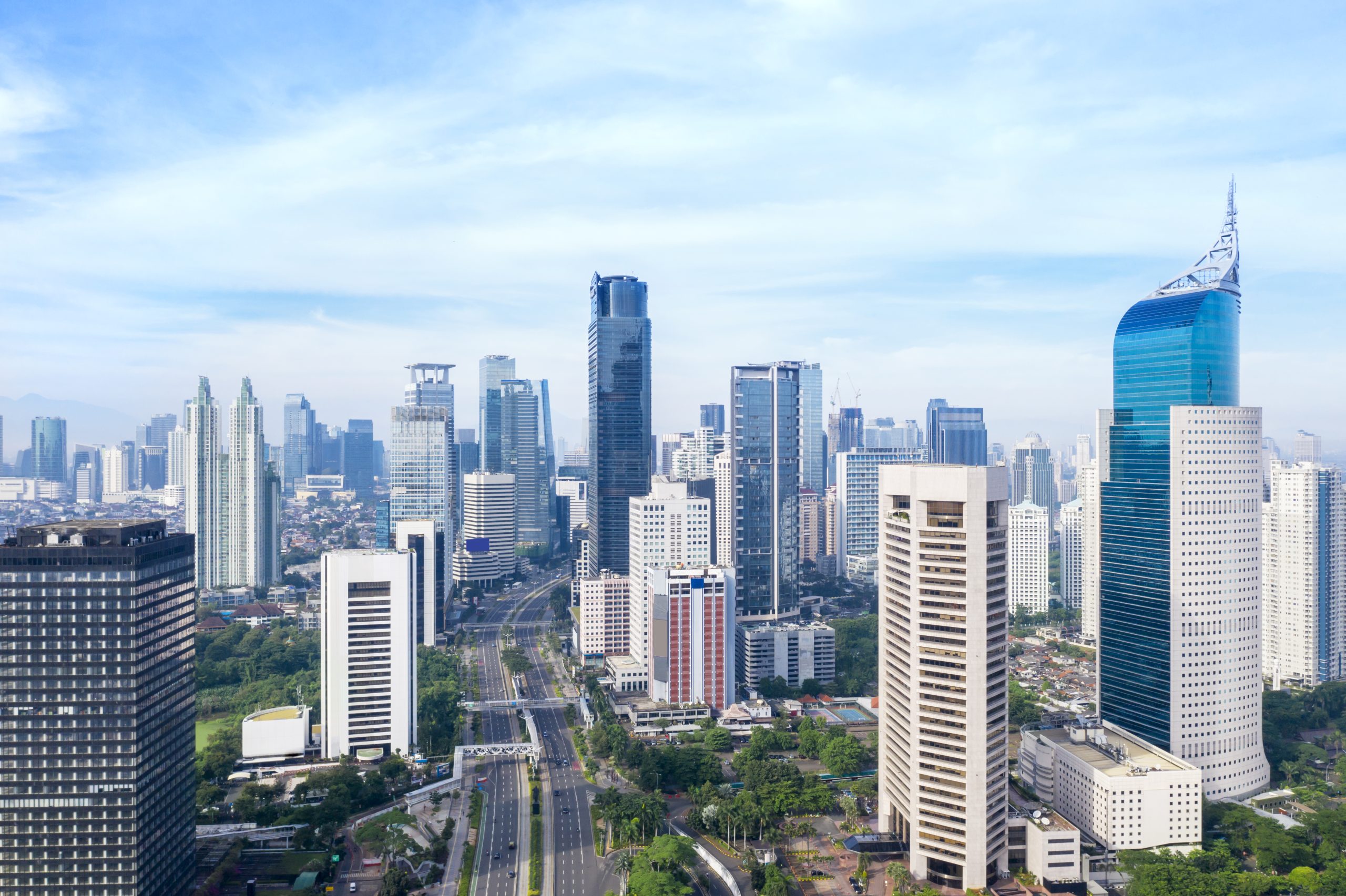
Important Indonesian Industries: Current Economic Climate and Investment Insights
- the current situation;
- issues in the sector; and
- suggestions that stakeholders may consider in each practice area.
Project and Infrastructure
- evaluating PSN programs for their harmful impacts;
- adjusting nomenclature and program scope related to PSNs itself; and
- focusing on legal frameworks such as the Draft Law (Rancangan Undang-Undang or “RUU”) on Land and RUU on Indigenous People specifically to reduce inequality and agrarian conflicts.
TMT
- The government establish a comprehensive AI governance policy;
- Indonesia follows the lead of the EU, the United States, China, and Brazil, in regulating AI by enacting dedicated legislation; and
- Identifying supervision mechanisms to protect the fundamental rights of citizens.
Real Estate
The property industry is the main pillar of Indonesia’s economy, serving as the most robust economic sector throughout the COVID-19 pandemic, despite the IMF and World Bank’s prediction of a global slowdown. This is because Indonesia’s property market is still relatively conventional and has not used real estate investment trusts (“REITs”), leaving it disconnected from the global property market. Furthermore, Indonesia’s property company contacts with foreign countries remain restricted, so the financial crisis of overseas property corporations has had no significant impact on the domestic market in Indonesia.[11] The industry presents several opportunities for people in a variety of fields, decreasing poverty, and creating new jobs.[12]
We predict that the property outlook in Indonesia in 2024 will be influenced by domestic economic conditions and the related authorities’ policies. Firstly, the Government and Bank Indonesia have implemented policies such as the fiscal incentive of Government-borne Value Added Tax (Pajak Pertambahan Nilai Ditanggung Pemerintah or “PPN-DTP”) and loan-to-value (“LTV”) relaxation. The PPN-DTP incentive aims to boost national economic growth and increase property demand by the public, which is regulated through the Ministry of Finance Regulation Number 7 of 2024 (“MoFR 7/2023“). Furthermore, the PPN-DTP fiscal incentive and LTV relaxation policies have proven effective in enhancing property sector performance.[13] This is reflected in the sector’s economic growth performance, particularly in the construction and household consumption of housing and buildings.
Secondly, the increase in demand from end-users, particularly in land-based housing projects, is also a supporting factor for the property sector’s growth this year. [14] Standard & Poor’s predicts housing sales will grow by 5-10%, despite rising demand and a backlog of unfulfilled housing needs for 12.7 million units.
Lastly, the impact of real estate in Indonesia on KPR and KPA interest rates shows a continuous decline, which can open opportunities for property credit growth. However, we view that this decline in interest rates can also increase credit risk, thus it is necessary for the government and banks to monitor it closely to prevent financial crises.
Nonetheless, the property sector continues to encounter obstacles such as a lack of affordable and accessible land, the limited availability of cheap funding,[15] a restricted number of developers qualified to work with the government and banks that provide loans,[16] high interest rates, and economic instability.[17] Therefore, to maximize opportunities in the sector, along with collaboration and coordination between the government, industry, and stakeholders, we recommend:
- optimizing PPN-DTP fiscal incentives;
- collaboration and innovation between the government and relevant stakeholders; and
- emphasis on infrastructure development, improving regulations, and public awareness of property investment.
The firm’s extensive and widely recognized expertise in the real estate sector encompasses advisory roles on significant transactions and regulatory compliance, contributing to the sector’s stability and growth. Notably, we have guided clients through the intricacies of tax planning and loan policies, bolstering national economic growth and property demand. Our involvement has been pivotal in navigating the sector’s challenges, ensuring robust legal support for enhancing property sector performance and fostering economic development.
Corporate M&A
Throughout 2023, M&A activity in Indonesia has remained strong and is predicted to continue on this trajectory.[18] Alongside this stability and growth, we are witnessing a shift in sector dominance, a reflection of the influence of global economic conditions on business sustainability and technology.
The advancement of financial technology (“Fintech”), insurance technology (“Insurtech“), and the expansion of digital banking have impacted M&A transactions, as seen throughout 2023. Indonesia’s M&A stability and growth throughout 2023 also experienced sector dominance due to the influence of global economic conditions on business sustainability and technological advancements.
M&A in Indonesia is witnessing increasing competition in various sectors, forcing companies to improve their scale and competitiveness to remain relevant and competitive. M&A has become an effective strategy to achieve this goal, allowing companies to integrate better resources and technologies and improve operational and financial capabilities. In addition, changing consumer trends may encourage M&As to increase market expansion and penetration.
In recent, a merger plan between PT Bank MNC Internasional Tbk. (“BAPB“) and PT Bank National Nobu Tbk. (“NOBU“) has been implemented since early 2023, although it is yet to be completed. The merger between BAPB and NOBU intends to form a group of banks with core capital II, along with increased operational and financial capabilities in meeting changing consumer needs.[19] Furthermore, a merger plan has been formed between Bank Muamalat and Bank BTN Syariah, to increase operational scale and competitiveness in Indonesia’s Islamic banking industry. The Minister of State-Owned Enterprises, Mr Erick Thohir, has emphasized the importance of merging Bank Muamalat with Bank BTN Syariah to improve access to Islamic finance for the wider community.[20] Despite this, the banks’ merger remains in the negotiation stage with further delays in obtaining data from the Public Accounting Firm.
Outside the banking sector, XL Axiata and Smartfren are predicted to merge, which would promote healthier competition in the telecommunications sector.[21] Additionally, news reports covered a possible merger between PT GOTO Gojek Tokopedia Tbk (“GOTO“) and Grab Holdings Ltd (“Grab”), however, the Management of GOTO denied this. A hypothetical merger between GOTO and Grab may cause monopoly competition problems in Indonesia leaving consumers and driver-partners with limited options for application-based transportation services. Therefore, we believe getting regulatory approval may be challenging, as, combined, GOTO and Grab would control a significant market share in the industry.
In conclusion, M&As in Indonesia face several challenges namely regulatory uncertainty in some sectors, and relatively high asset values compared to other countries, further increasing M&A-related costs. Additionally, the recent elections in Indonesia may lead to policy changes creating uncertainty and volatility for investors.
The firm has played a pivotal role in numerous high-profile transactions across various sectors, leveraging our expertise to navigate the complexities of M&A. Our team has successfully advised on transactions involving financial technology, digital banking, and telecommunications, sectors that have seen significant M&A activity influenced by global economic conditions. Our comprehensive legal and business-oriented advice ensures our clients achieve their strategic objectives while enhancing their operational and financial capabilities in an increasingly competitive market.
Insurance
The insurance industry in Indonesia still faces challenges as demonstrated by its slow growth which can be attributed to low use and public trust in insurance products, cumbersome claims processes, unaffordable premiums, limited public access, and defaults. [22]
The industry’s growth can be observed through the increasing insurance inclusion rate, which represents the percentage of the population utilizing insurance products. According to the National Literacy and Inclusion Survey (Survei Nasional Literasi dan Inklusi or “SNLIK”), Indonesia’s insurance inclusion rate has risen from 13.15% in 2019 to 16.63% in 2022. However, there is still a substantial gap between the insurance inclusion rate and the insurance literacy rate. Based on SNLIK, the insurance literacy rate was 19.40% in 2019 and has increased to 31.72% in 2022, indicating that more individuals have a better understanding of insurance types and products.[23]
However, equitable access to general insurance remains a challenge, particularly in East Kalimantan (1,4%) and Bali (1,7%) while Jakarta recorded the highest percentage of premium income (63%).[24] Furthermore, despite a majority Muslim population, Sharia insurance products are still unknown to the public. For instance, Aceh has significant potential for Sharia insurance, however, the premium income in Aceh remains relatively low.[25] Issues such as low penetration and density, cyber risks, and a lack of awareness about insurance and its benefits further restrict the industry.
Consequently, in support of the expansion of the insurance industry, the Indonesia Financial Services Authority (Otoritas Jasa Keuangan or “OJK”) in collaboration with insurance associations, published the Roadmap for the Development and Strengthening for the Indonesia Insurance Industry 2023-2027, which has been harmonized with Law No. 4/2023 (“P2SK Law”). This roadmap aims to create a sound, efficient insurance industry that upholds high integrity, strengthens consumers and public protection, and supports national economic growth.[26]
In addition to effective coordination between the government, industry, and stakeholders, to reform and increase public trust in the national insurance sector, we suggest the government:
- strengthen the resilience and competitiveness of the insurance industry;
- implementation of a Policy Guarantee Program (Program Penjamin Polis or “PPP”) as mandated by the P2SK Law;
- development of supervisory technology (“Suptech”) and regulatory technology (“Regtech”); and
- strengthening regulation, supervision, and licensing.[27]
The firm has consistently leveraged its extensive experience in the sector to support and advise on significant transactions and regulatory compliance. The firm has provided comprehensive legal services in the acquisition of majority shares in various local insurance companies, ensuring compliance with Indonesian regulations and fostering smooth transaction processes. Additionally, we have offered expert advice on Islamic finance structures, demonstrating our ability to navigate complex regulatory landscapes. Our involvement in these high-stake transactions underscores our commitment to enhancing the resilience and competitiveness of the Indonesian insurance market.
To learn more about the legal landscape of key industries in Indonesia, please visit our website at www.bepartners.co.id. You can also reach out to us directly via email at info@bepartners.co.id. Our team is here to assist you with our comprehensive legal services and strategic insights.

- [1] World Bank, Indonesia GDP growth rate. https://data.worldbank.org/indicator/NY.GDP.MKTP.KD.ZG?locations=ID.
- [2] Statista, Indonesia: GDP contribution by industry in 2024. https://www.statista.com/statistics/1019099/indonesia-gdp-contribution-by-industry/.
- [3] Kementerian Perdagangan Republik Indonesia, Siaran Pers, Terbesar di Asia Tenggara, Potensi Ekonomi Digital Indonesia Pada 2025 Capai USD 146 Miliar. https://www.kemendag.go.id/berita/siaran-pers/terbesar-di-asia-tenggara-potensi-ekonomi-digital-indonesia-pada-2025-capai-usd-146-miliar.
- [4] Agung Nugroho, UGM’s News, Harmonisasi Peraturan Pembangunan Infrastruktur di Indonesia Mendesak Dilakukan. https://ugm.ac.id/id/berita/23389-diperlukan-upaya-harmonisasi-peraturan-untuk-pembangunan-infrastruktur-di-indonesia/.
- [5] Nabilah Muhamad, Databooks, 13 Proyek Strategis Nasional Rampung pada 2023, Ini Daftarnya. https://databoks.katadata.co.id/datapublish/2024/04/02/13-proyek-strategis-nasional-rampung-pada-2023-ini-daftarnya.
- [6] Tempo, Inilah Daftar 14 Proyek Strategis Nasional (PSN) Baru yang Disetujui Presiden Jokowi pada 2024, https://nasional.tempo.co/read/1846827/inilah-daftar-14-proyek-strategis-nasional-psn-baru-yang-disetujui-presiden-jokowi-pada-2024, and Kompas.com, Jokowi Setujui Penambahan 14 Proyek Strategis Nasional Baru, Ini Daftarnya, https://nasional.kompas.com/read/2024/03/18/19371781/jokowi-setujui-penambahan-14-proyek-strategis-nasional-baru-ini-daftarnya.
- [7] Kontras, Peluncuran Catatan Kritis: Atas Nama Proyek Strategis Nasional: Ruang Hidup Dirampas, Masyarakat Tertindas. https://kontras.org/laporan/peluncuran-catatan-kritis-atas-nama-proyek-strategis-nasional-ruang-hidup-dirampas-masyarakat-tertindas.
- [8] RM.id, 41 Proyek Strategis Nasional Ditarget Kelar Tahun Ini Masalah Lahan Dan Tata Ruang Masih Jadi PR. https://rm.id/baca-berita/ekonomi-bisnis/214211/41-proyek-strategis-nasional-ditarget-kelar-tahun-ini-masalah-lahan-dan-tata-ruang-masih-jadi-pr.
- [9] Kompas, “Lapar” Lahan Proyek Strategis Nasional Picu Konflik. https://www.kompas.id/baca/ekonomi/2024/01/15/lapar-lahan-proyek-strategis-nasional-picu-konflik.
- [10] PwC Indonesia, PwC Indonesia TMT Update 2023, p. 3.
- [11] Sekar Aqillah Indraswari, DetikProperti, Properti 2024 Diramal Cerah, Pengembang Sebut Ini Salah Satu Faktornya. https://www.detik.com/properti/berita/d-7213998/properti-2024-diramal-cerah-pengembang-sebut-ini-salah-satu-faktornya.
- [12] BM Lukita Grahadyarini, Kompas, Properti: Sektor Properti Topang Perekonomian. https://www.kompas.id/baca/ekonomi/2023/04/10/sektor-properti-tahan-banting?status=sukses_login&status_login=login&loc=hard_paywall.
- [13] Sunarsip, CNBC Indonesia, Prospek Properti 2024: Potensi Perkembangan dan Tantangannya. https://www.cnbcindonesia.com/opini/20240131115052-14-510443/prospek-properti-2024-potensi-pertumbuhan-dan-tantangannya.
- [14] See Sekar Aqillah Indraswari, Supra Note 11.
- [15] In.Corp, Indonesia Real Estate in 2024: Trends and Insights. https://www.cekindo.com/blog/indonesian-real-estate.
- [16] Sunarsip, CNBC Indonesia, Prospek Properti 2024: Potensi Pertumbuhan dan Tantangannya. https://www.cnbcindonesia.com/opini/20240131115052-14-510443/prospek-properti-2024-potensi-pertumbuhan-dan-tantangannya.
- [17] Nando Rifky, GoodNewsfromIndonesia, https://www.goodnewsfromindonesia.id/2023/06/07/prospek-industri-properti-di-indonesia.
- [18] Aprillia Ika, Kompas.com, Aktivitas Merger dan Akuisisi di Indonesia Dinilai Tetap Kuat pada 2024. https://money.kompas.com/read/2024/02/28/120000726/aktivitas-merger-dan-akuisisi-di-indonesia-dinilai-tetap-kuat-pada-2024.
- [19] CNBC Indonesia, Update Terbaru Soal Merger dengan NOBU, Bank MNC (BABP). https://www.cnbcindonesia.com/market/20240422180625-17-532395/update-terbaru-soal-merger-dengan-nobu-bank-mnc–babp–bilang-gini.
- [20] Romys Binekasari, CNBC Indonesia, Kabar Terbaru Merger BTN Syariah dan Bank Muamalat. https://www.cnbcindonesia.com/market/20240422180625-17-532395/kabar-terbaru-merger-btn-syariah-dan-bank-muamalat.
- [21] Fathur Rochman, Antara News, Smartfren Harap Proses Merger dengan XL Axiata Tidak Berlangsung Lama. https://www.antaranews.com/berita/4106454/smartfren-harap-proses-merger-dengan-xl-axiata-tak-berlangsung-lama.
- [22] Anna Suci Perwitasari, Keuangan, Ini Tantangan dan Isu Utama Industri Asuransi di Indonesia. https://keuangan.kontan.co.id/news/ini-tantangan-dan-isu-utama-industri-asuransi-di-indonesia.
- [23] OJK, Roadmap for the Development and Strengthening of the Indonesian Insurance Industry 2023-2027 Restoring Confidence Through Industrial Reform, p. 38.
- [24] Ibid, p. 43.
- [25] Ibid, p. 45.
- [26] Ibid, p. 22.
- [27] Ibid, p. 69.